Your download link is delivered immediately via email after checkout
Dopamine Detox Explained Simply: How to Reset Your Brain and Reclaim Focus
Learn what dopamine detox is, how it works, and how a simple dopamine detox can help you regain focus, discipline, and control over distractions.
HABIT BUILDINGPERSONAL GROWTHSELF-IMPROVEMENTDISCIPLINETRANSFORMATION
Polaris Star Editorial
3/7/20263 min read
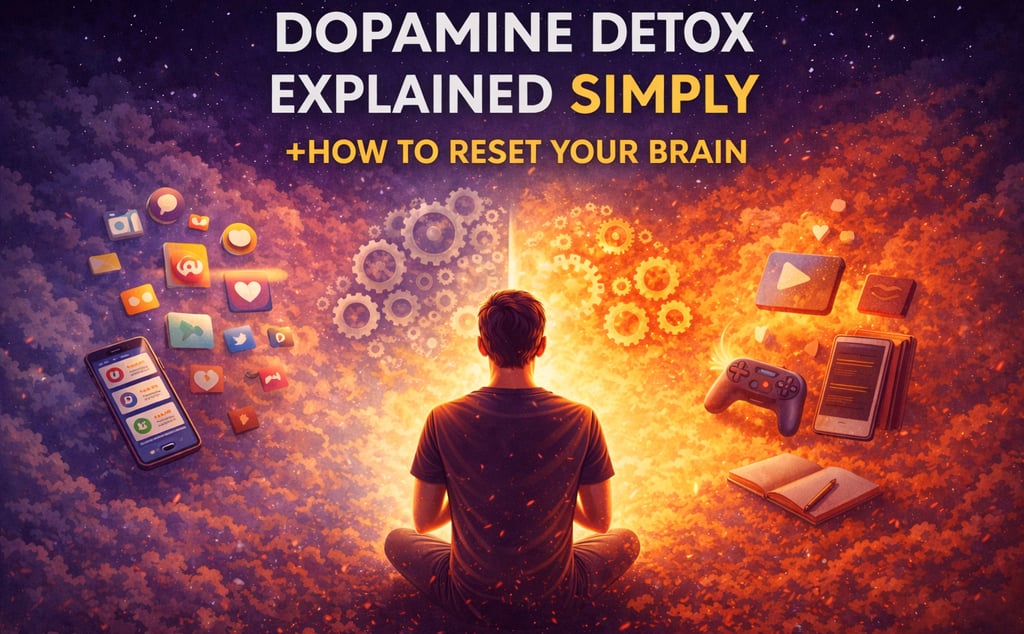
Dopamine Detox Explained Simply
If you’ve ever tried to focus on something important but ended up scrolling your phone instead, you’ve experienced the modern dopamine trap.
Your brain constantly searches for quick rewards.
Social media.
Short videos.
Notifications.
Instant entertainment.
Each of these triggers dopamine — a chemical associated with pleasure and reward.
The problem is not dopamine itself.
The problem is too much stimulation.
And that’s where a dopamine detox becomes powerful.
What Dopamine Actually Is
Dopamine is a neurotransmitter in your brain that helps regulate motivation, pleasure, and reward.
When you do something enjoyable, your brain releases dopamine.
Examples include:
eating tasty food
watching entertaining videos
receiving social media likes
winning a game
completing a task
Dopamine encourages behaviors that your brain believes are rewarding.
This is useful for survival and motivation.
But in the modern world, dopamine systems are constantly overstimulated.
The Modern Dopamine Overload
Technology has created unlimited sources of instant pleasure.
Your brain can get rewards instantly through:
social media scrolling
gaming
junk food
binge watching
endless notifications
These activities deliver quick dopamine spikes.
Over time, your brain adapts.
It begins to expect high stimulation all the time.
As a result, normal activities like studying, working, or reading start to feel boring.
Not because they are boring.
But because your brain has become used to stronger stimulation.
What Is a Dopamine Detox?
A dopamine detox is a short period where you intentionally reduce highly stimulating activities.
The goal is simple:
Give your brain time to reset its reward sensitivity.
During a dopamine detox, people reduce activities such as:
social media use
gaming
junk food consumption
constant phone checking
binge entertainment
This allows your brain to regain sensitivity to slower, meaningful activities.
After a detox, things like reading, working, and learning feel more satisfying again.
Why Dopamine Detox Works
Your brain constantly adapts to stimulation levels.
If you consume high stimulation all day, your baseline increases.
This means normal tasks feel less rewarding.
But when you reduce stimulation, your brain recalibrates.
Suddenly simple activities start to feel enjoyable again.
This is similar to reducing sugar intake.
After avoiding sugar for some time, even natural foods taste sweeter.
The brain works the same way.
Signs You Might Need a Dopamine Detox
You may benefit from a dopamine detox if you notice:
difficulty focusing on important tasks
frequent phone checking
feeling restless without entertainment
procrastinating important work
losing interest in productive activities
These are common symptoms of overstimulation.
And they are increasingly common in the digital age.
How to Do a Simple Dopamine Detox
You don’t need extreme rules.
A practical dopamine detox can be simple.
Step 1: Reduce Instant Stimulation
Limit activities such as:
social media scrolling
gaming
unnecessary phone usage
binge watching
You don’t have to eliminate them forever.
Just reduce them significantly.
Step 2: Replace With Low-Stimulation Activities
During detox periods, focus on activities like:
reading
journaling
exercising
walking
learning a skill
These activities produce slower dopamine release.
Which helps your brain rebalance.
Step 3: Schedule Detox Windows
Instead of quitting everything permanently, create time blocks.
Examples:
no phone for the first hour after waking
social media only after work hours
one day each week with minimal digital use
Consistency matters more than intensity.
Step 4: Accept Initial Discomfort
At first, you may feel bored or restless.
This is normal.
Your brain is adjusting to lower stimulation.
Within a few days, focus often improves dramatically.
Dopamine Detox and Discipline
A dopamine detox works best when combined with discipline.
In the article Discipline vs Motivation, we discussed how motivation fades quickly.
Reducing distractions makes discipline easier.
When fewer distractions exist, your brain naturally directs energy toward meaningful work.
Dopamine Detox and Long-Term Change
Short detox periods help reset your focus.
But long-term transformation requires consistent habits.
That’s why systems like the 90-Day Reset Rule can reinforce discipline over time.
When you combine reduced distractions with consistent routines, productivity increases significantly.
Final Thoughts: Control Your Attention
Your attention is one of your most valuable resources.
Modern technology constantly competes for it.
A dopamine detox is not about rejecting pleasure.
It’s about regaining control.
When you reduce constant stimulation, your brain becomes calmer, clearer, and more focused.
And once focus returns, productivity and discipline follow naturally.
FAQ
Is dopamine detox scientifically proven?
While the term “dopamine detox” is simplified, reducing overstimulation and distractions can improve focus and self-control.
How long should a dopamine detox last?
Even short detox periods of 24 hours or structured daily limits can improve attention and productivity.
Can I still use technology during a dopamine detox?
Yes. The goal is reducing excessive stimulation, not eliminating useful tools.